WasteWise: Smart Waste Sorting
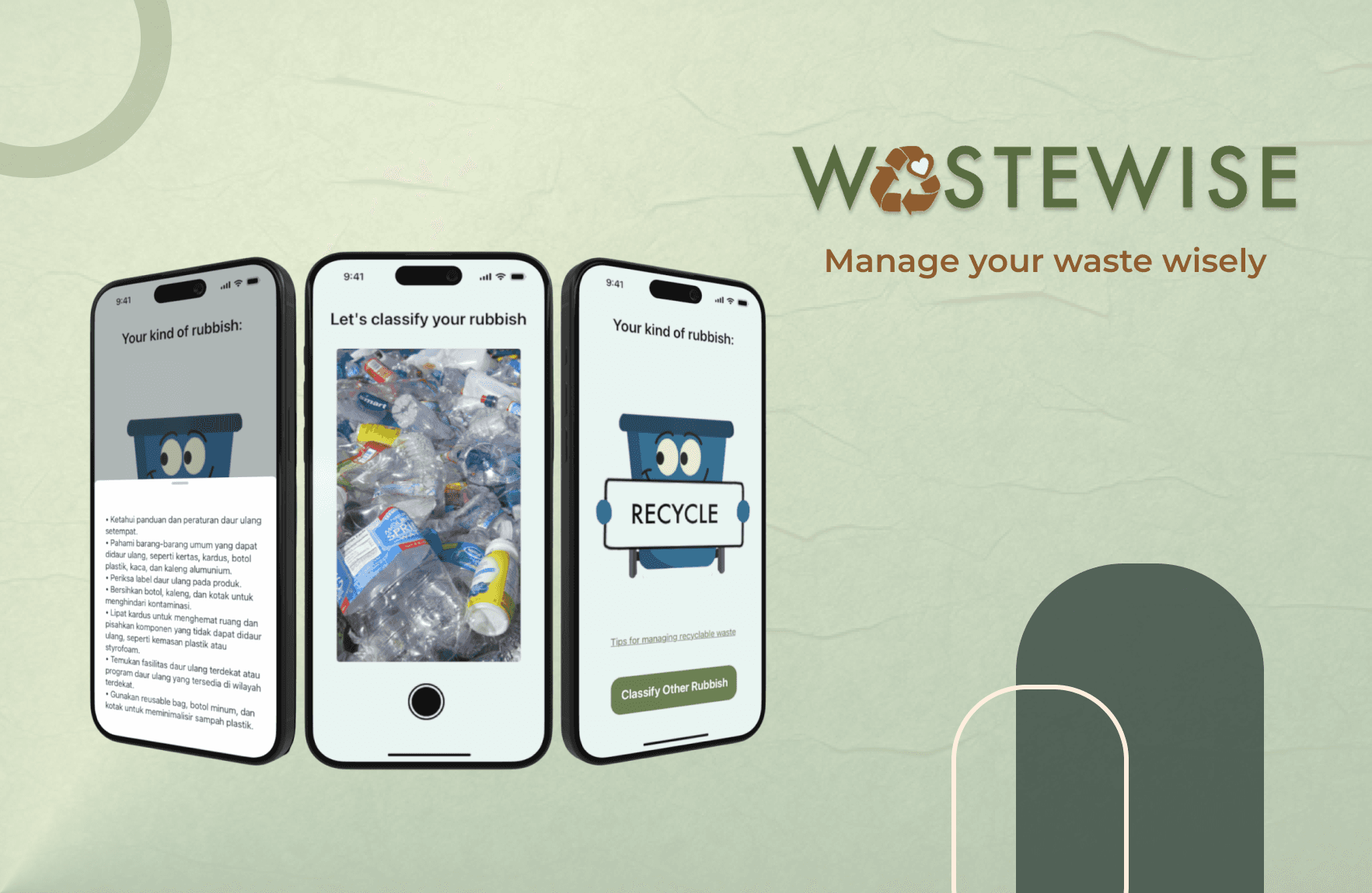
For this project, I was required to design and develop an app or game using Apple frameworks, with Machine Learning as a key feature. My objective was to create a practical solution that help users identify and dispose of waste correctly. The result was WasteWise, an app that uses image recognition to determine whether waste is recyclable or organic. This app provides instant classification results along with educational waste management tips, encouraging users to adopt proper disposal habits.
UI/UX Designer, Developer, Illustrator
May 2023
Utilities, Lifestyle
iOS
Sketch, Miro, Procreate
Problem
Waste misclassification is a common issue that leads to improper waste disposal and environmental concerns. Many people struggle to differentiate between recyclable and organic waste, which can result in ineffective waste management. By utilizing Machine Learning, WasteWise aimed to simplify this process by enabling users to capture waste images and receive instant classification along with disposal guidance.
Process
Research & Analysis: To ensure the feasibility of the project, I explored various ideas that could be developed within a two-week timeframe. After brainstorming and visualizing possible applications, I settled on WasteWise. Research was conducted to understand common waste classification issues and user needs in waste management.
Key Findings: Through research, I identified key pain points in waste classification. Many people were unaware of how to sort their waste correctly, and there was a lack of accessible tools to assist in real-time waste categorization. These insights guided the development of WasteWise to offer a simple, automated solution.
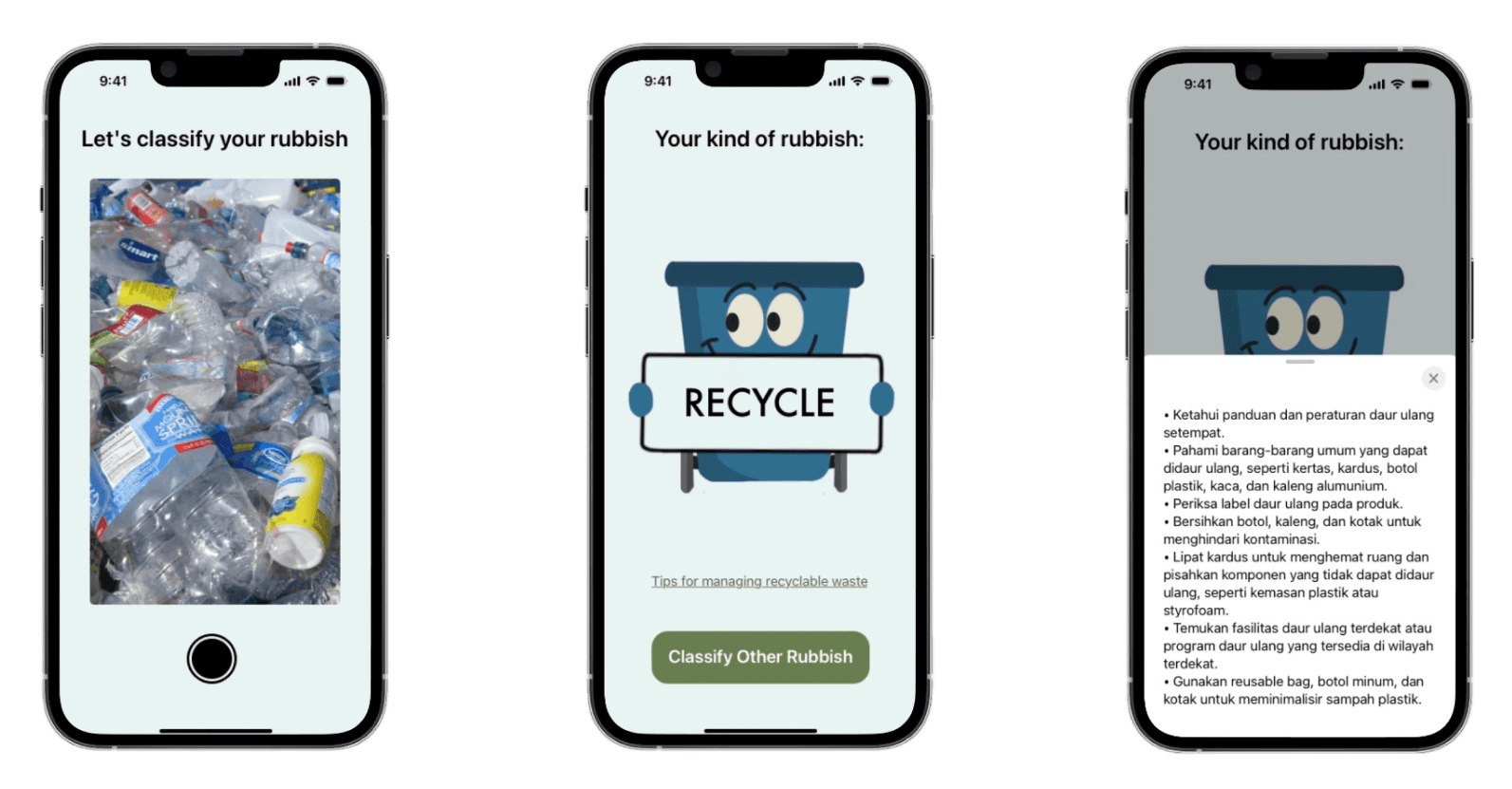
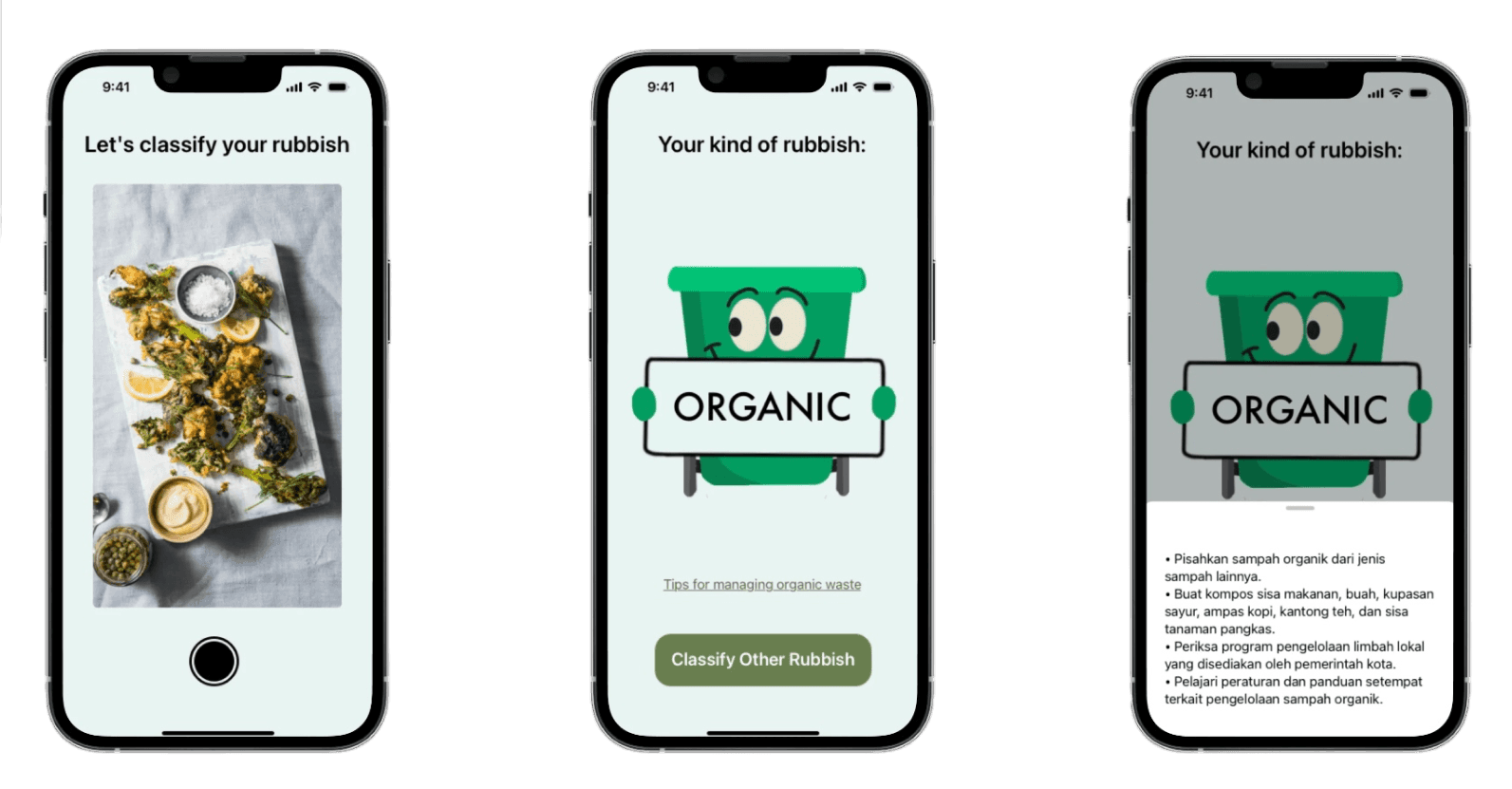
Solution Concept: WasteWise was designed as an app that would classify waste by processing images taken through a user’s device camera. The machine learning model trained on waste categories enabled the app to determine whether an item was recyclable or organic. To enhance the user experience, the app also provided waste disposal tips tailored to the analyzed item.
Wireframing & Prototyping: Once the solution was conceptualized, I built a prototype with a clean and intuitive design, ensuring users could easily capture images and receive classification results.
• High-Fidelity Design
Conclusion
Through this project, I gained valuable experience in integrating Machine Learning into an app while addressing a real-world problem. The exhibition feedback highlighted key areas for improvement, such as disabling human detection, refining object focus, and expanding waste type categories.